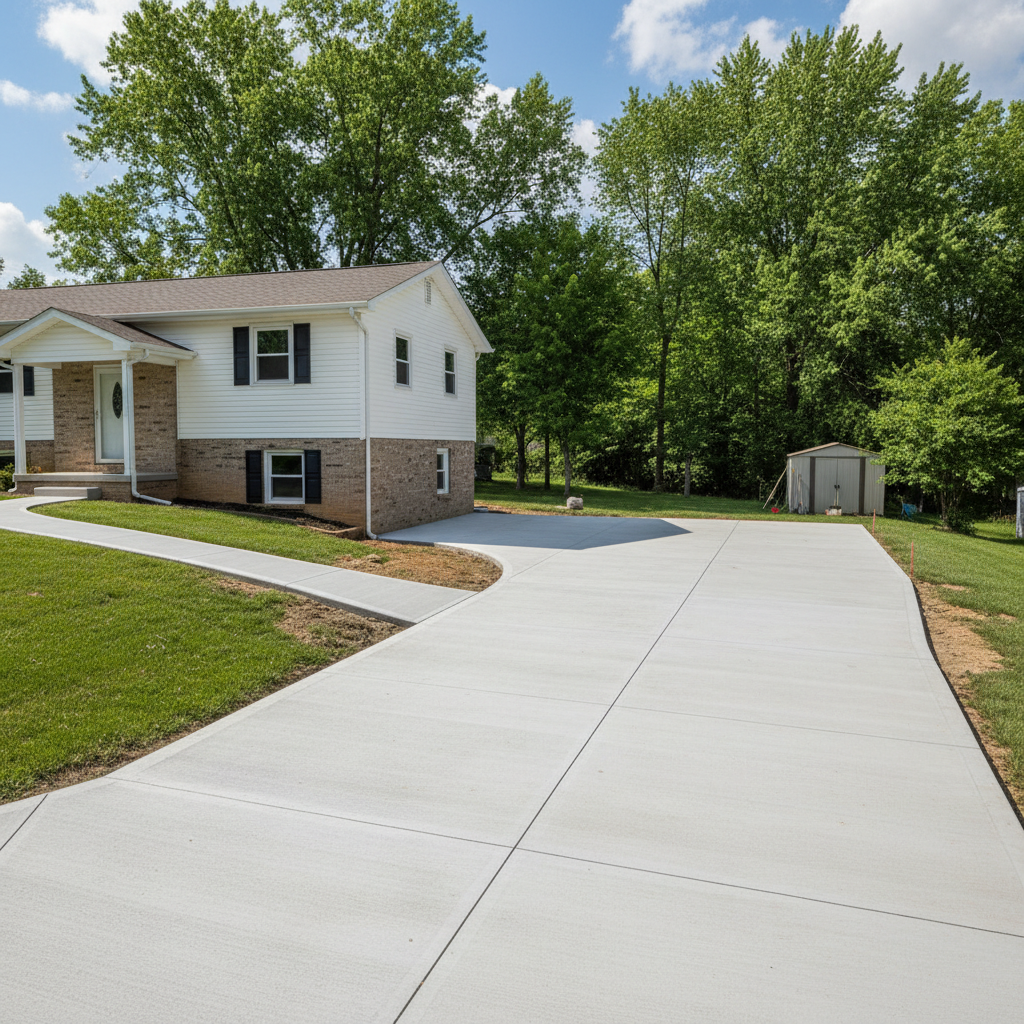
Got some concrete around your place that's seen better days? Maybe it's a cracked driveway, a sunken patio, or some crumbling steps. It's not just an eyesore; it can be a real safety hazard. Planning a concrete repair project might seem like a big headache, but it doesn't have to be. I've been doing this a long time here in Aurora, and I've seen pretty much everything. Let's talk about what you need to know to make your project go smoothly.
Setting Expectations: Your Project Timeline
You're probably wondering, "How long is this going to take?" That's a fair question, and the honest answer is, "It depends." But I can give you a general idea. For most residential concrete repairs – think a driveway section, a patio, or a sidewalk – the actual work on site might only be a day or two. If it's a bigger job, like a whole new driveway pour, it could stretch to three or four days.
However, that's just the 'wet work' time. You've got to factor in curing. Concrete needs time to reach its full strength. For light foot traffic, you're usually looking at 24 to 48 hours. For vehicles, you'll need to stay off it for at least 7 days, sometimes longer depending on the mix and the weather. Don't rush this part; it's crucial for the longevity of your repair. Then there's the lead time to even get started. Good contractors are busy, especially in spring and fall. You might wait a few weeks, or even a couple of months, to get on the schedule. So, if you're planning a big summer BBQ on your new patio, start planning in early spring.
What to Expect When We're Working
When the crew shows up, things are going to get a little noisy and dusty. We're often breaking up old concrete, which means jackhammers and saws. We'll try to keep the mess contained, but dust travels, especially on a windy day here in southwest Missouri. We'll need access to your yard, so make sure gates are unlocked and pets are secured.
We'll typically start by marking out the area, then removing the old concrete. That debris gets hauled away. Next, we prepare the subgrade. This is super important. We'll make sure the ground underneath is stable and properly graded. Sometimes we add gravel or other base materials. Then forms go up – these are the molds that shape your new concrete. Rebar or wire mesh might be laid down for reinforcement, depending on the job. Finally, the concrete gets poured, leveled, and finished. We'll make sure it's sloped correctly for drainage, especially important around foundations to avoid water issues. Once it's poured, we'll often put up barriers or tape to keep people and pets off it while it cures.
How to Get Your Home Ready
You can really help us out and make the whole process smoother by doing a few things before we even get there:
- Clear the area: Move any patio furniture, grills, planters, toys, or anything else off and around the concrete we're working on.
- Trim back plants: If you've got bushes or tree branches hanging over the work zone, give them a trim. It gives us room to work and protects your landscaping.
- Water access: We'll need water for mixing, cleaning, and sometimes for curing. Make sure an outdoor spigot is accessible.
- Power access: For saws and other tools, we might need an outdoor power outlet.
- Secure pets and kids: This is a construction zone. Keep everyone safe by keeping them away from the work area.
- Talk to your neighbors: Give them a heads-up that there's going to be some noise and activity for a day or two. Good neighbor relations are always a win.
Questions to Ask Before You Sign Anything
Choosing a contractor is a big deal. You want someone reliable who knows their stuff. Here are some questions I'd ask if I were in your shoes:
- Are you licensed and insured? This is non-negotiable. Don't even consider someone who isn't. You need to be protected if something goes wrong.
- Can you provide references? Ask for contact info for a few recent customers. Call them up and ask about their experience.
- What's your warranty? A good contractor stands behind their work. Ask about the length and what it covers.
- What's included in the price? Get a detailed quote. Does it include demolition, hauling away debris, site prep, materials, and labor? Are there any hidden fees?
- How do you handle unexpected issues? Sometimes we uncover things once we start digging, like old pipes or unstable soil. How will they communicate those issues and what's the process for additional costs?
- What kind of concrete mix will you use? Different projects need different strengths. For Aurora, where we get pretty big temperature swings, you want a mix that can handle freeze-thaw cycles.
- What's the payment schedule? Most contractors ask for a deposit, then progress payments, and a final payment upon completion. Be wary of anyone asking for a huge upfront payment.
- Who will be on site? Will it be the owner, or a crew? How experienced are they?
Taking the time to plan and ask the right questions will save you a lot of headaches down the road. At Aim High Concrete Solutions, we believe in clear communication and doing the job right the first time. Your concrete repair is an investment, and you deserve a solid result that lasts.