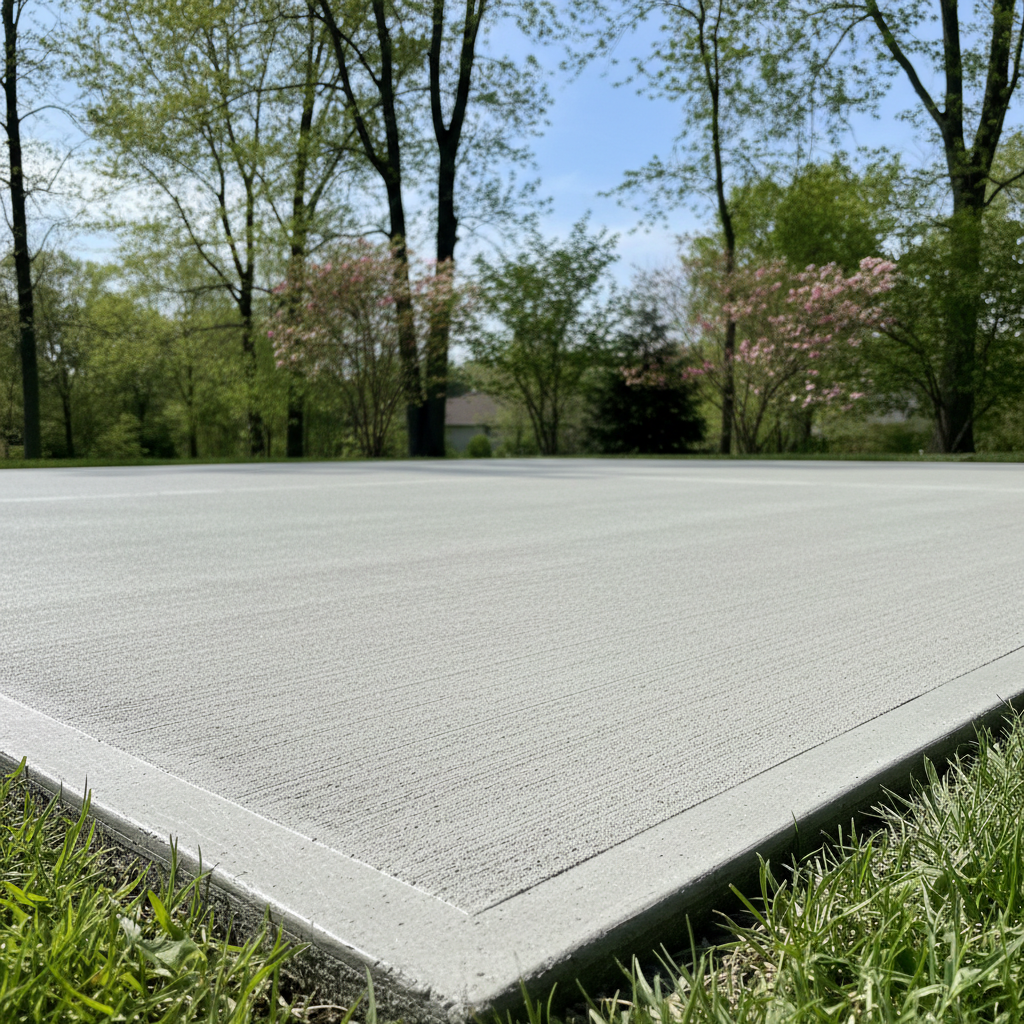
Alright, let's talk patios. Specifically, concrete patios. I get a lot of questions from folks around Aurora, whether they're in the older neighborhoods near town square or out in the newer developments. Everyone wants to know what they're getting into before they pull the trigger on a new outdoor space. So, I figured I'd lay out the answers to the most common questions I hear. No fluff, just the straight goods.
How long does a concrete patio really last?
This is a big one, and it's a fair question because you're investing in something you want to enjoy for years. A well-installed concrete patio, done right from the ground up, can easily last 20 to 30 years, sometimes even longer. I've seen patios around here that are 40 years old and still holding up, though they might need a little TLC by then. The key is proper preparation of the base, using the right concrete mix, and making sure it's sealed. If you skimp on any of those steps, you're looking at a shorter lifespan, maybe 10-15 years before you start seeing significant cracking or spalling. It's like anything else; you get out what you put in.
What's the deal with cracking? Is it avoidable?
Okay, let's be blunt: concrete cracks. It's not a matter of 'if,' but 'when' and 'how much.' It's a natural characteristic of the material. Concrete shrinks as it dries and cures, and that shrinkage creates internal stresses. That's why we put in control joints – those lines you see cut into the concrete. They're not just for looks; they're designed to give the concrete a designated place to crack, ideally in a straight, controlled line that's not as noticeable or damaging. We also use rebar or wire mesh to help hold those cracks tight and prevent them from widening. Good drainage and a stable subgrade also play a huge role. Here in Aurora, with our clay soils that can expand and contract with moisture, proper subgrade compaction and drainage are even more critical to minimize movement that can lead to cracking. We can't prevent every tiny hairline crack, but we can definitely control the big, ugly ones.
How much does a concrete patio cost?
This is probably the most asked question, and unfortunately, there's no single answer. It's like asking how much a car costs – depends on the make, model, and features. For a concrete patio, the price per square foot can vary quite a bit. Factors include the size and shape of the patio, the thickness of the concrete, whether you want standard broom finish or something decorative like stamped concrete or exposed aggregate, and the accessibility of the site. If we have to tear out an old patio first, that adds to the cost. Generally, you're looking at a range, but for a basic broom-finish patio, it might be one price, and for a complex stamped design with multiple colors and borders, it'll be significantly more. The best way to get an accurate number is to have us come out and give you a free estimate. That way, we can look at your specific project and give you a solid figure.
Do I need to seal my concrete patio? How often?
Absolutely, yes, you need to seal it. Think of it like putting a clear coat on your car or stain on your deck. A good sealer protects the concrete from moisture penetration, stains, UV damage, and freeze-thaw cycles, which are definitely a thing here in southwest Missouri. It also helps preserve the color if you have a decorative patio. For most patios, I recommend sealing it within a month or two of installation, once the concrete has fully cured. After that, plan on resealing every 2-3 years, depending on the type of sealer and how much wear and tear the patio gets. It's a relatively inexpensive maintenance step that pays huge dividends in extending the life and look of your patio.
What's the maintenance like for a concrete patio?
Compared to a wood deck, concrete patios are pretty low maintenance, which is one of their big selling points. The main things you'll need to do are: clean it periodically, usually with a hose and a stiff brush, or a pressure washer for tougher spots. You'll want to keep it free of debris like leaves and dirt, especially over the winter, to prevent staining and moisture buildup. And, as I just mentioned, resealing every few years is crucial. That's really about it. You don't have to worry about rot, termites, or splinters like you do with wood. It's a set-it-and-forget-it kind of deal for the most part, which is why so many folks choose it.
Can I put a concrete patio over an existing one?
This is a tricky one, and my answer is usually 'it depends,' but often, 'no.' While it's technically possible to pour new concrete over old concrete, it's generally not the best idea for a patio. If the existing patio has significant cracks, is heaving, or has drainage issues, those problems will almost certainly transfer to the new layer. You're just putting a band-aid on a broken leg. The new concrete also needs to bond perfectly to the old, which is hard to guarantee long-term. If the old patio is in really good shape, mostly level, and just needs a facelift, sometimes a thin overlay or resurfacing product can work, but that's a different animal than pouring a whole new slab. For a durable, long-lasting patio, removing the old one and starting fresh with a properly prepared base is almost always the way to go. It costs more upfront, but it saves you headaches and money down the road.
Hopefully, that clears up some of the common questions you might have about concrete patios. If you're thinking about adding one to your home, or if you've got more specific questions, don't hesitate to reach out to us at Aim High Concrete Solutions. We're always happy to talk through your project and help you figure out the best approach.