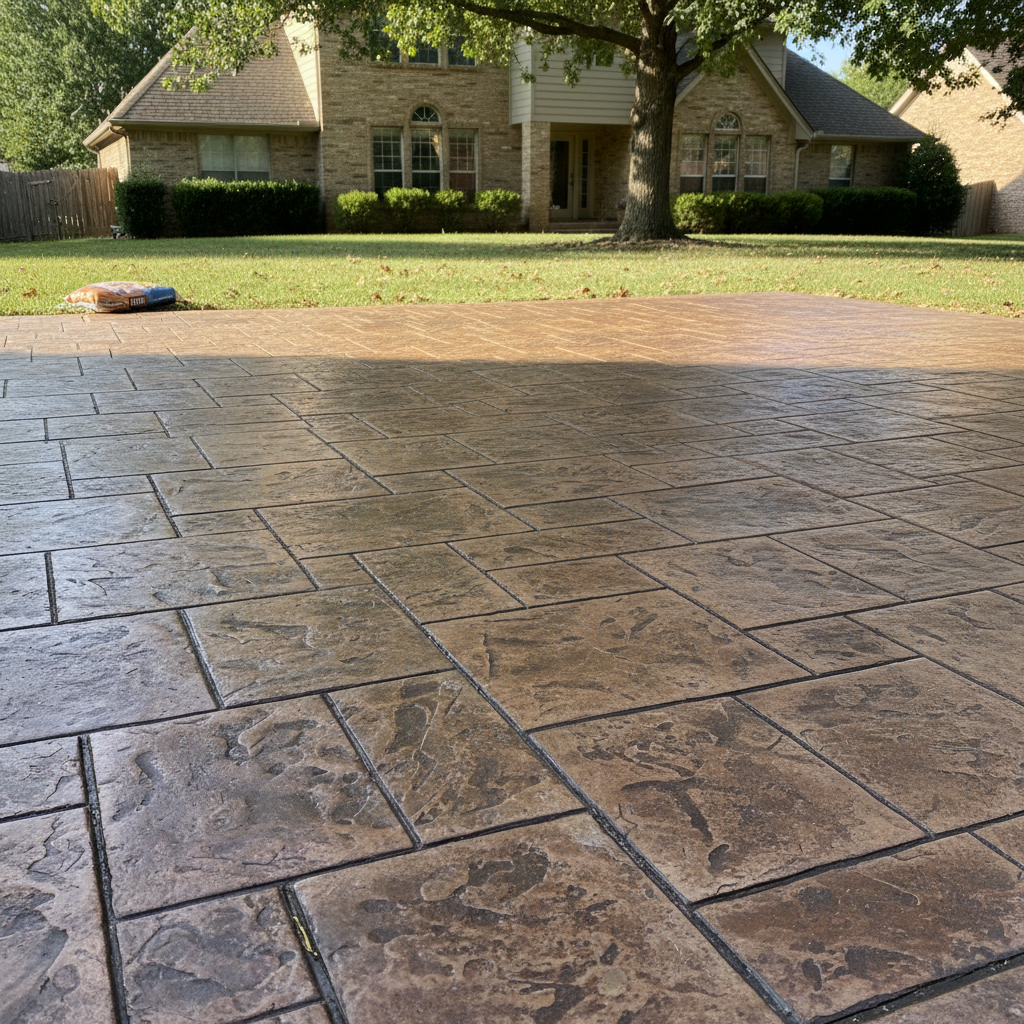
What exactly is stamped concrete, and how's it different from regular concrete?
Alright, let's get this straight from the start. Regular concrete, you know, is that plain gray stuff we pour for driveways, sidewalks, and foundations. It's strong, durable, and it definitely gets the job done. Stamped concrete? Well, it's still concrete, but we add a whole lot more to it. Think of it this way: we pour the concrete, and while it's still wet and easy to work with, we use special tools – these big, flexible mats with patterns molded right into them – to press those designs into the surface. We can make it look like brick, natural stone, wood planks, or even slate. Before all that, we usually add color to the concrete mix itself, or we apply a color hardener to the surface. That way, it's not just gray with a pattern, right? It's about getting concrete's strength and longevity, but with the good looks of more expensive materials, and without the maintenance headaches those materials often bring.
How long does stamped concrete last, especially with our Missouri weather?
That's a fair question, especially with the crazy swings we get here in Southwest Missouri. You know how it is, 90 degrees and humid one day, then freezing rain a week later. If it's installed correctly – and that's a big "if" – stamped concrete can easily last 25 to 30 years, sometimes even longer. The key really is proper installation. That means good site preparation, the right concrete mix, and correct curing. We're talking about making sure the base is solid, the concrete has the right strength, and it's sealed properly. That sealer, by the way, is your stamped concrete's best friend against our freeze-thaw cycles and those strong UV rays. Without it, water can seep in, freeze, and cause spalling or cracking. So, a good seal and reapplying it every few years is crucial for how long it lasts around here.
Is stamped concrete slippery when it's wet or icy?
That's a common concern, and it's a valid one. Nobody wants to slide around on their patio or walkway, especially when it's slick from rain or ice. The truth is, any hard surface can be slippery when wet, but stamped concrete isn't inherently more slippery than, say, natural stone or even smooth regular concrete. What makes the real difference is the finish and the sealer. When we apply the sealer, we can add an anti-slip additive – it's usually a fine grit that mixes right into the sealer. You won't actually see it, but it creates a bit of texture on the surface, giving you better traction. So, yes, it can be slippery if we skip that step, but we always recommend and use anti-slip additives to make sure it's as safe as possible for you and your family.
What kind of maintenance does stamped concrete need?
One of the big reasons folks choose stamped concrete is that it's pretty low maintenance compared to pavers or natural stone. You won't have weeds growing between joints, and you're not dealing with individual stones shifting. Mostly, it just needs to be kept clean. A good sweep now and then, maybe a rinse with a hose, and for tougher spots, a mild detergent and a brush will do the trick. The most important maintenance task, though, is resealing. I tell all my clients, especially those living in areas like the older neighborhoods off of West Church Street where trees drop a lot of leaves and debris, you'll want to reseal it every 2-5 years. That timeframe depends on how much sun and foot traffic it gets. The sealer protects the color and the surface from fading, stains, and weather damage. It's not a huge job, and it really extends the life and look of your investment.
Can stamped concrete be repaired if it cracks or gets damaged?
Look, concrete is tough, but it's not indestructible. Cracks can happen for a bunch of reasons – ground movement, heavy loads, improper installation, or even just the natural expansion and contraction of concrete. If a crack does appear, or if there's some surface damage, we can often repair it. It's usually not as simple as patching regular concrete, because you've got to try and match the color and the pattern. For minor cracks, we can sometimes use a color-matched caulk or a specialized repair compound. For bigger damage, it might mean cutting out a section and repouring, then restamping and recoloring to blend it in. It's tricky to get a perfect match, but a skilled contractor can usually make it look pretty darn good. Prevention is always better, though, which goes right back to proper installation and maintenance, doesn't it?
How much does stamped concrete cost compared to other patio or driveway materials?
This is where a lot of people start doing the math. Stamped concrete usually falls somewhere in the middle of the price range when you're looking at outdoor surfaces. It's definitely going to be more expensive than plain gray concrete because of the extra labor, materials (color, release agents, stamps), and the skill involved. You're paying for the artistry and the added aesthetic value, after all. However, it's often more affordable than natural stone pavers, brick, or flagstone, especially when you factor in the installation costs of those materials. Plus, with stamped concrete, you're getting one continuous surface, which means less maintenance over time compared to individual pavers that can settle or shift. It's a balance of upfront cost, long-term durability, and the look you want for your home. We at Aim High Concrete Solutions always aim to give you a clear breakdown so you know exactly what you're getting for your money.
What are the best times of year to install stamped concrete in Aurora?
Timing is pretty important for any concrete work, and stamped concrete is no different. You want conditions where the concrete can cure properly – not too hot and not too cold. Here in Aurora, I generally recommend spring and fall. In the spring, after the last hard freeze – usually late March through May – the temperatures are mild, and there's often enough moisture in the air to help with curing. Fall, from September through early November, is also excellent. The ground is warm, and the air temperatures are usually ideal. Summer can work, but we have to be really careful with curing because that intense July and August sun can dry out the concrete too fast, leading to issues. Winter? Forget about it. Pouring concrete when it's freezing or below just isn't a good idea unless you're taking some serious, expensive precautions. So, if you're planning a project, aim for those sweet spots in spring or fall.