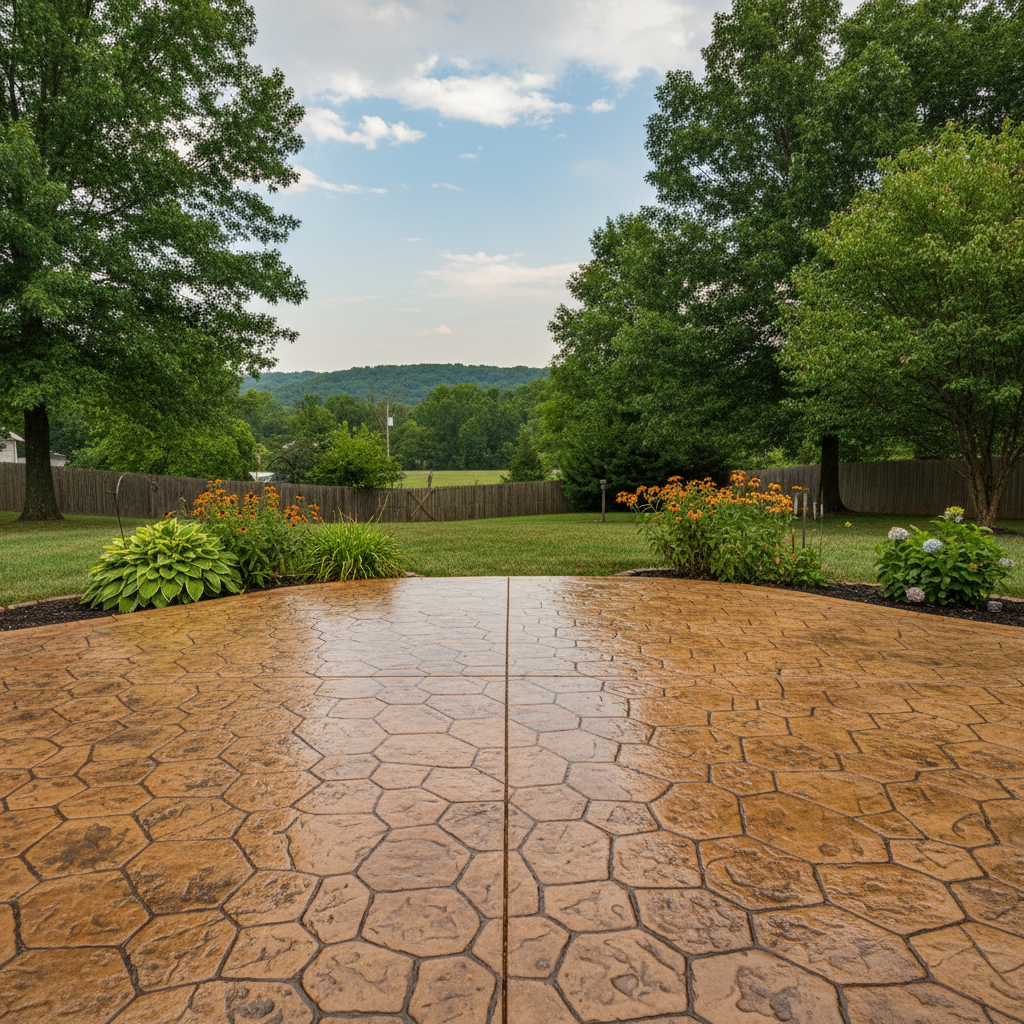
You've put money into stamped concrete, and it looks amazing. Maybe it's a patio, a walkway, or even your driveway. It really boosts curb appeal and adds a touch of class that plain old concrete just can't touch. But here's the thing: it's not a "set it and forget it" kind of deal. To keep it looking as good as the day we poured it, you've got to give it a little love. Especially here in Aurora, where our seasons really put concrete through its paces, don't they?
Why Keeping Up With Maintenance Is Key for Your Stamped Concrete
Just think about it. Our Missouri climate is no joke. We get scorching summers, freezing winters, and everything in between. That constant expansion and contraction, plus rain, snow, and those harsh UV rays, can really wear down any outdoor surface. Stamped concrete is tough, sure, but its decorative finish — especially the color and sealant — needs protection. Without it, you'll start seeing fading, wear, and eventually, it just won't have that pop anymore. You want that rich color and texture to last, right? That's exactly where maintenance comes in.
Your Yearly Stamped Concrete To-Do List
Most of the maintenance is pretty simple, stuff you can handle yourself. It's usually a once-a-year job, maybe twice if it's a high-traffic spot or gets a lot of sun.
- Clean it Up: First things first, get it clean. Sweep away any dirt, leaves, or debris. A good sweep is a start. For a deeper clean, grab a mild detergent and a soft brush. You *can* use a pressure washer, but be careful. Don't set it too high, and keep the nozzle moving. You definitely don't want to blast off the sealant or damage the surface. Just a gentle wash to get the grime off.
- Check for Cracks and Chips: While you're cleaning, take a good, close look at the surface. Are any small cracks starting to form? Any chips, especially around the edges or where something heavy might have been dropped? Catching these early can save you a much bigger headache later on.
- Re-seal It: This is probably the most important step of all. The sealant is what protects your stamped concrete's color and keeps it looking vibrant. Most sealants say they last 1-3 years, but with our freeze-thaw cycles here in Aurora, I usually tell folks to re-seal every 1-2 years. Make sure the surface is completely clean and dry before you put on a new coat. Use a good quality, non-yellowing acrylic sealer. You can roll it on with a paint roller; just make sure you get an even coat. Don't go too thick, or it could get slippery or peel.
- Watch for Weeds: If you have expansion joints or control joints, weeds just love to sprout in those tiny gaps. Pull them out as soon as you spot them. You can use a weed killer, but be careful not to get it on the concrete itself, as some chemicals can stain or damage the sealant.
Warning Signs You Really Shouldn't Ignore
Your stamped concrete will usually let you know when it needs some help. Keep an eye out for these things:
- Fading Color: If your beautiful browns, grays, or reds are starting to look dull and washed out, that's a big sign your sealant is failing and the sun's UV rays are getting right to the color.
- White or Hazy Patches: People often call this 'blushing' or 'whitening,' and it usually means moisture got trapped under the sealant, or the sealant went on too thick or when it was too humid. It can also happen if someone used the wrong type of sealer.
- Peeling or Flaking: If the sealant is peeling off in sheets or flaking away, it's absolutely time for a new coat. This can happen if the surface wasn't prepped right, or if the sealant has simply worn out its welcome.
- Excessive Cracking: Small hairline cracks can be normal, but if you're seeing larger, spiderweb-like cracks, or cracks that are growing, that's a bigger issue.
- Slippery Surface: If your stamped concrete suddenly feels really slick, especially when it's wet, it might be because there's too much sealant, or the wrong kind. Sometimes, adding a non-slip additive to the sealer can help, but it's something to address for safety's sake.
When to Call a Professional (Like Us at Aim High Concrete Solutions)
While you can handle a lot of the maintenance yourself, there are times when it's just smarter to call in the pros. If you're seeing any of those warning signs I just mentioned, especially the peeling, significant cracking, or persistent haziness, it might be time for an expert opinion.
Sometimes, a simple re-seal just isn't enough. If the old sealant is really failing, it might need to be stripped off completely before a new coat can go on. That's a messy, time-consuming job that requires specific chemicals and equipment. Also, if you've got deeper cracks, spalling (where the surface is flaking off), or significant settlement issues, those aren't DIY fixes. We can assess the damage, figure out the best way to repair it, and make sure your stamped concrete gets back to looking its best.
Don't let a small problem turn into a big one. A little proactive care, and knowing when to call for help, will keep your stamped concrete looking fantastic for years to come. It’s a great investment for any home, whether it’s in the older neighborhoods near downtown or out in the newer developments off Highway 60, and it truly deserves to be protected.