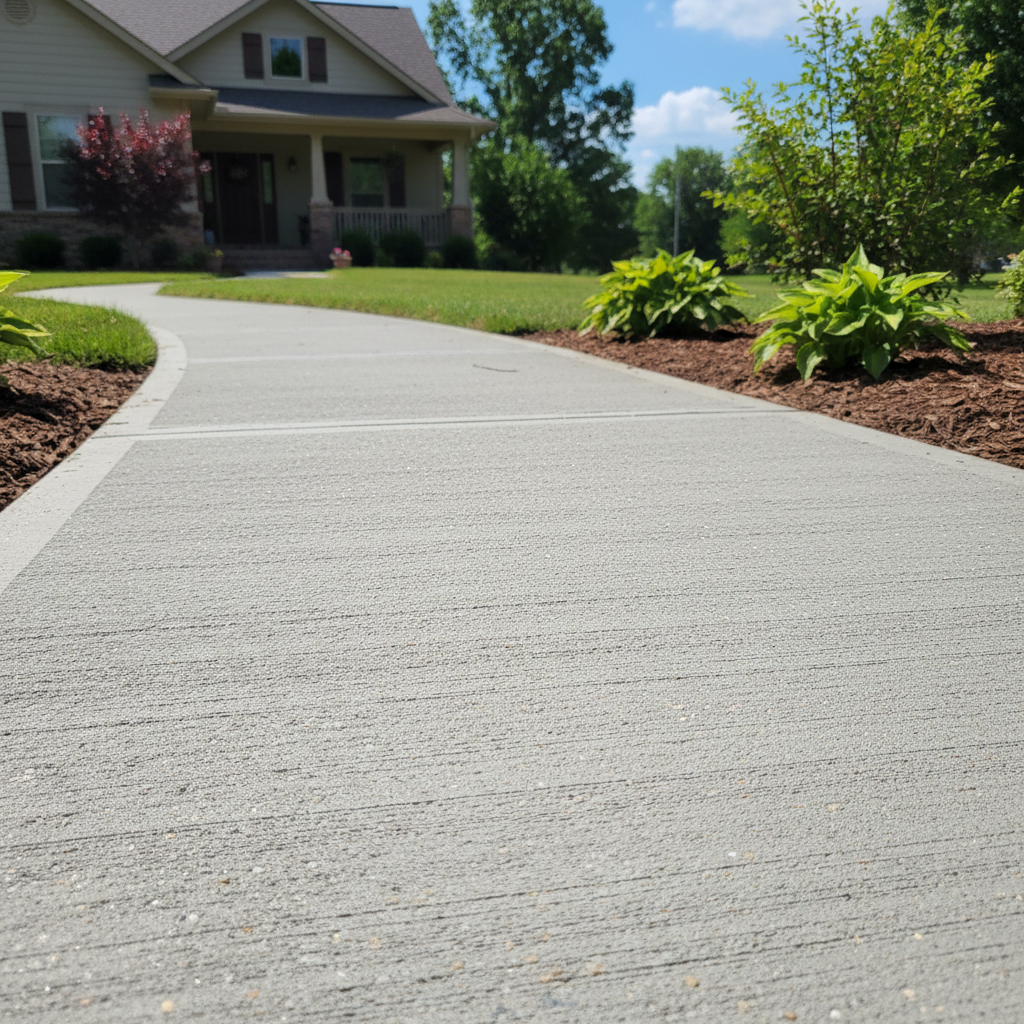
What's the deal with cracks in my concrete sidewalk? Are they normal?
Alright, let's talk about cracks. Yeah, they're pretty common, especially here in Missouri with our crazy freeze-thaw cycles. Concrete shrinks a little as it dries, and then it expands and contracts with temperature changes. That movement, plus our clay soils that can shift and swell, really stresses the slab. Control joints – those lines you see cut into the concrete – are supposed to give the concrete a place to crack in a controlled way. So when you see a crack, it's often just the concrete finding its own stress relief, you know?
Now, are they normal? Small, hairline cracks, especially along the control joints, often are. But if you're seeing wide cracks (say, bigger than a quarter-inch), cracks that are uneven (one side higher than the other), or cracks that spiderweb all over the place, that usually signals a bigger issue. It could be poor sub-base prep, bad drainage, or even tree roots messing with things. Don't ignore those; they can turn into trip hazards or let water undermine the whole slab.
How long should a concrete sidewalk last in Aurora, MO?
If it's poured right and maintained decently, a concrete sidewalk in Aurora should easily last you 20 to 30 years, sometimes even longer. I've seen some sidewalks around the older parts of town, like near the square, that are pushing 50 and still holding up, albeit with some wear and tear. The key is good materials, proper sub-base compaction, the right water-to-cement ratio, and those control joints cut at the correct depth and spacing. We're talking about a lot of variables here, from the quality of the mix to how well the ground was prepared underneath. If you skimp on any of those steps, you'll see it fail a lot faster.
My sidewalk has sunken sections. Can it be fixed, or do I need a whole new one?
Sunken sections are a pain, but you might not need to tear out the whole thing. Often, this is a sub-base issue – water washing away the soil underneath, or poor compaction when it was first installed. For sections that have just dropped a bit but are still mostly intact, concrete leveling, sometimes called 'mudjacking' or 'slabjacking,' can be a really effective solution. We pump a special mixture (it can be a cementitious grout or polyurethane foam) under the slab to lift it back into place. It's usually a lot faster, less messy, and cheaper than replacing the whole section.
However, if the concrete is severely cracked, crumbling, or broken into a bunch of small pieces, then replacement is probably your best bet. You can't lift a pile of rubble. We'd have to assess it, but I'll always tell you if leveling is a viable option first, because it can save you a lot of headache and money.
What's the best way to clean my concrete sidewalk?
For general cleaning, a good stiff broom and some elbow grease with a hose can do wonders. For tougher stains, like dirt, grime, or mildew that builds up, especially in shaded areas, a pressure washer is your friend. Just be careful with the pressure setting; too high and you can etch or damage the surface, especially if it's an older, softer slab. Start with a fan tip and a lower PSI, then gradually increase if needed.
For oil or grease, a degreaser specifically designed for concrete works well. Apply it, let it soak, scrub, and then rinse thoroughly. And for those pesky rust stains from metal furniture or fertilizer, an oxalic acid-based cleaner can often lift them. Always test any cleaner in an inconspicuous spot first to make sure it doesn't discolor your concrete. And aim to clean it at least once a year to keep it looking good and prevent buildup.
Do I need to seal my concrete sidewalk? And how often?
You bet you do! Sealing your concrete sidewalk is one of the best things you can do to protect your investment. Think of it like sunscreen for your concrete. A good sealer repels water, which is crucial for preventing those freeze-thaw cycles from causing damage. It also helps resist stains from oil, dirt, and even those pesky leaf tannins. Plus, it can make cleaning a lot easier.
For most sidewalks, I recommend sealing every 2-3 years. If your sidewalk gets a lot of sun exposure, heavy foot traffic, or you live in an area with a lot of trees dropping debris, you might want to do it every year or two. There are different types of sealers – penetrating sealers that soak in and topical sealers that form a protective layer. We at Aim High Concrete Solutions can help you pick the right one for your specific sidewalk and apply it properly for maximum protection.
What causes those white powdery spots on my concrete, and how do I get rid of them?
Ah, efflorescence. That's what those white powdery spots are called. It's a pretty common issue, especially with new concrete or concrete that's been exposed to a lot of moisture. What happens is, water seeps into the concrete, dissolves mineral salts (like calcium) within the concrete, and then as the water evaporates from the surface, it leaves those salts behind as a white, powdery residue.
For light efflorescence, you can often just brush it off with a stiff brush and water. For heavier deposits, you might need a mild acid solution, like a diluted vinegar solution or a commercial efflorescence remover. Again, always test in a small, hidden area first. The best way to prevent it is to ensure good drainage around your sidewalk and consider a quality penetrating sealer, which helps reduce water absorption into the concrete itself.
Can tree roots damage my concrete sidewalk? What can I do about it?
Absolutely, tree roots are notorious for causing damage to sidewalks. As trees grow, their roots expand, and they're incredibly strong. They'll push up against anything in their way, including your concrete slab, causing it to lift, crack, and become uneven. This is a big problem in older neighborhoods in Aurora where big, mature trees line the streets.
Dealing with it can be tricky. You can trim the roots, but you have to be careful not to damage the tree's health. Sometimes, installing a root barrier between the tree and the sidewalk can redirect root growth downwards. If the damage is severe, you might need to remove the tree or consider rerouting the sidewalk around the tree. It's a balancing act between preserving the tree and keeping your sidewalk safe and intact. It's definitely something to consider when planting new trees near any concrete work.