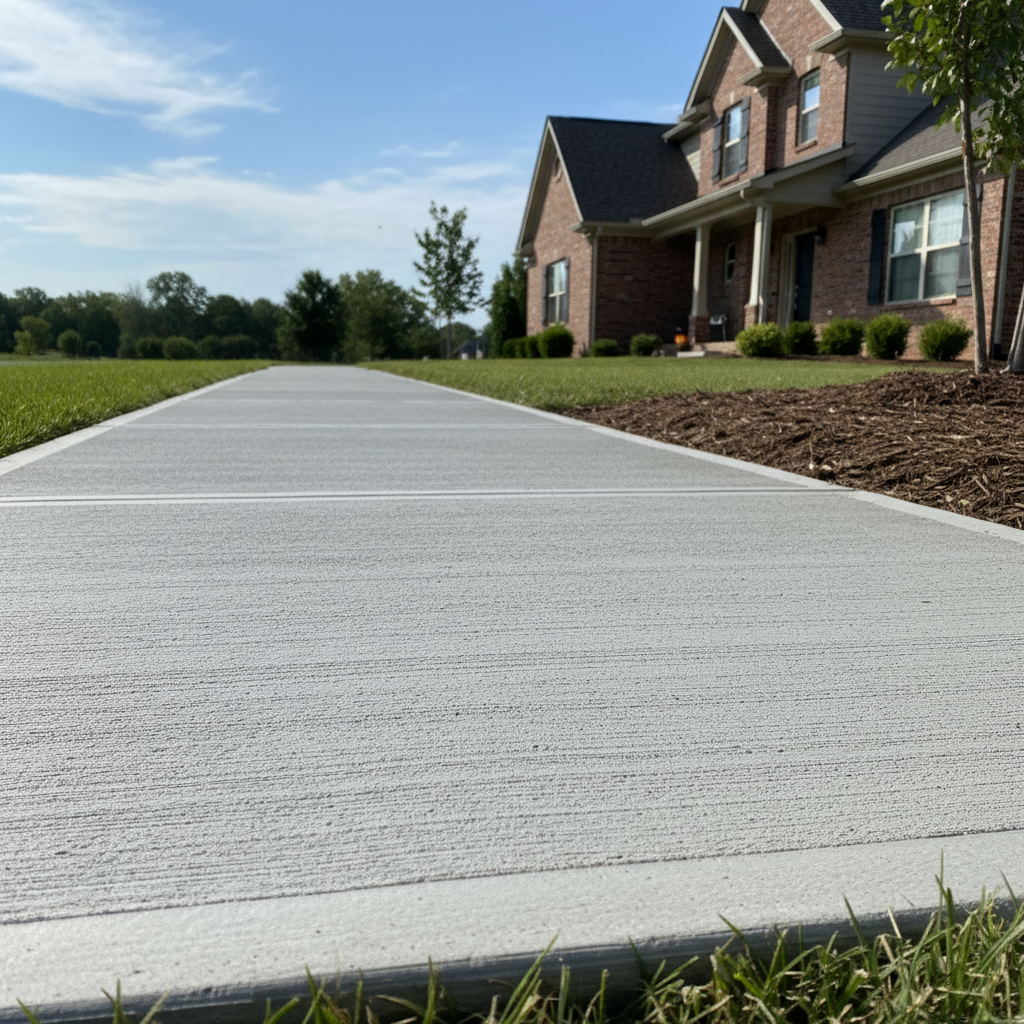
Why do concrete sidewalks crack, even new ones?
This is probably the most common question I hear, and it's a good one, really. You see a brand-new sidewalk go in, and then just a few months later, there's a hairline crack. Frustrating, right? I get it. Concrete shrinks as it cures, and that's just how the material works. That's why we put in control joints – those cuts you notice every few feet. They're there to give the concrete a specific spot to crack in a straight, controlled line, instead of just randomly splitting all over the place. Think of it like scoring a piece of glass; you're basically telling it where to break. If those joints aren't cut deep enough, or if the concrete dries too fast, or if the ground moves a lot, you can still end up with some random cracking. Here in Aurora, with our clay-rich soils, we definitely see a fair bit of expansion and contraction, and that puts extra stress on any concrete flatwork.
How long should a concrete sidewalk last in Aurora, MO?
A concrete sidewalk that's been installed correctly, with the right sub-base prep and good quality concrete, should easily last you 20 to 30 years. Maybe even longer! I've actually seen some sidewalks in the older parts of Aurora, like around the downtown square, that are still holding up after decades. The trick, of course, is that "installed correctly" part. If folks cut corners – a thin slab, no rebar or mesh, bad drainage, or poor finishing – you're looking at a much shorter lifespan. Freezing and thawing cycles, de-icing salts, and heavy foot traffic all play a role, but solid initial work makes a huge difference.
Do I need rebar or mesh in my sidewalk?
Absolutely, you do. This isn't really an option; it's essential for both longevity and strength. Rebar (that's reinforcing bar) or welded wire mesh gives the concrete tensile strength. Concrete, you see, is super strong under compression – meaning it can handle a ton of weight pushing down on it. But it's not so great when it's being pulled apart, like when the ground shifts, or when temperature changes cause it to expand and contract. The rebar or mesh holds the concrete together, stopping small cracks from turning into big, structural failures. It's like the skeleton of your sidewalk, if you think about it. Don't let anyone tell you it's not necessary – that's a red flag right there.
What's the deal with uneven sidewalk sections? Can they be fixed?
Uneven sections, which people often call 'tripping hazards,' usually happen when the ground underneath settles or washes away in one spot more than another. Tree roots can also lift sections, which is a common culprit. For minor unevenness, sometimes you can just grind down the higher edge to make it safer. For bigger problems, especially if a section has sunk, concrete lifting (also known as mudjacking or polyjacking) can be a great solution. We inject a material underneath the slab to raise it back to level. It's often much less disruptive and more affordable than tearing out and replacing the whole section. It's a specialized skill, but it can save you a lot of headache and money if the concrete itself is still in good shape.
How much does a new concrete sidewalk cost per linear foot?
That's a tough one to give you a single number for, because it really varies a lot. You're generally looking at a range, typically anywhere from $10 to $20 per square foot, which translates to a good bit per linear foot depending on how wide it is. But that's just a ballpark figure. Things that affect the price include how thick the slab needs to be, whether you need extensive excavation or to remove old concrete, the kind of sub-base material required, how easy it is to get equipment to the site, and any special finishes or curves. The cost of concrete itself fluctuates, too. The best way to get an accurate price is to have a contractor like Aim High Concrete Solutions come out, look at your specific project, and give you a detailed quote. We'll break down exactly what you're paying for.
Can I pour a concrete sidewalk myself?
Look, I'm all for DIY projects, and I certainly respect anyone who wants to tackle home improvements. But pouring a concrete sidewalk isn't like painting a wall, you know? It's a physically demanding job that requires specific knowledge and tools. You need to understand proper sub-base preparation, how to set forms accurately, mixing and pouring the concrete correctly, and then, crucially, finishing it just right. Get any of those wrong, and you'll end up with a cracked, uneven, or quickly deteriorating sidewalk. The material itself is heavy, and once it starts to set, you're on a clock. For a small patch, maybe. For a whole new sidewalk, especially if it's got any length to it, I'd strongly recommend bringing in a professional. It'll save you a lot of backache and potential headaches down the road.
What's the best way to clean and maintain my concrete sidewalk?
Keeping your sidewalk clean is pretty straightforward. For general dirt and grime, a good sweep and then a wash with a garden hose and a stiff brush usually does the trick. For tougher stains like oil or mildew, you can use a pressure washer (just be careful not to use too high a pressure or get too close, as it can damage the surface) or a specialized concrete cleaner. As for maintenance, sealing your concrete every few years is a really good idea, especially with our Missouri weather. A good quality penetrating sealer will protect it from water absorption, freeze-thaw damage, and staining. It's kind of like putting sunscreen on your skin – it helps protect it from the elements and keeps it looking good longer.