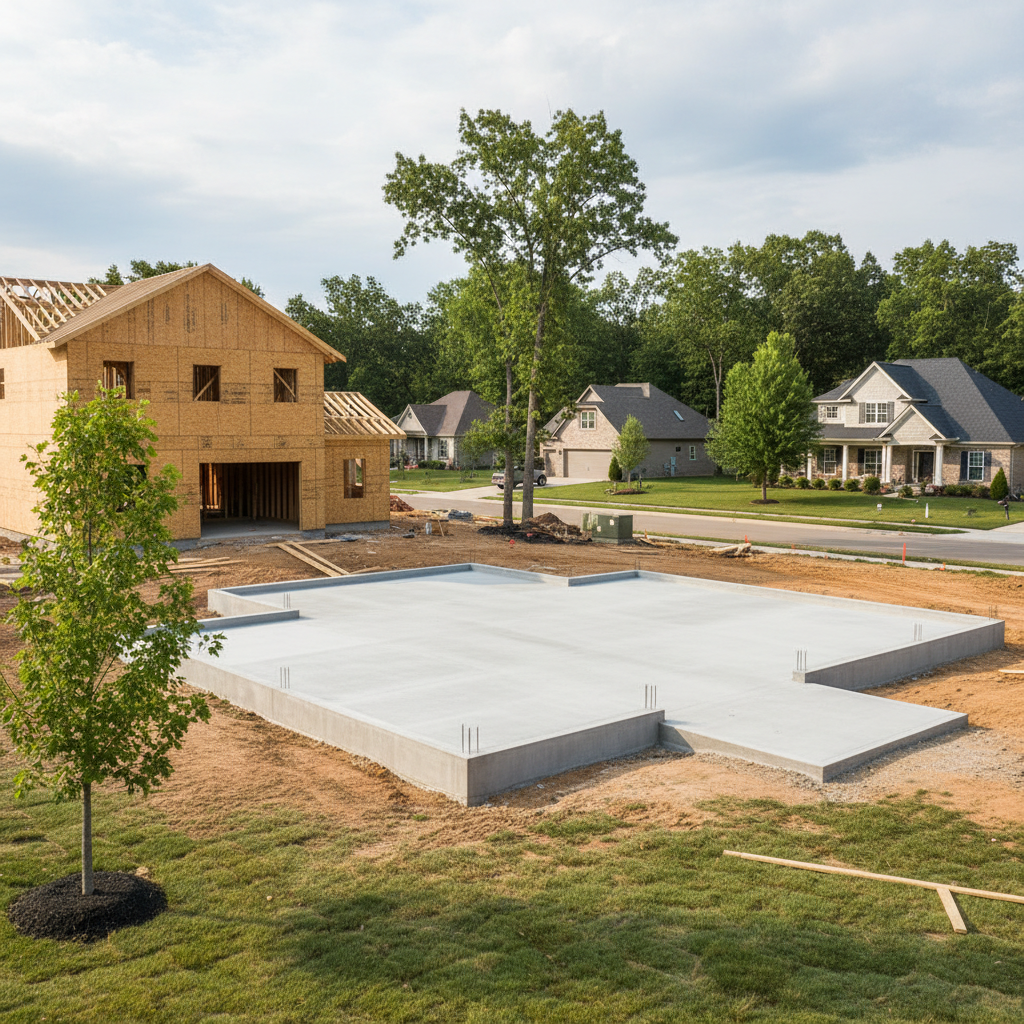
Alright, let's talk foundations here in Aurora. I've seen a lot of projects come and go over the years, and one thing's for sure: a good foundation isn't just important, it's everything. You can have the prettiest house or the most functional shop, but if the foundation isn't solid, you're going to have problems down the road. And around here, with our unique conditions, that's even more true.
Why Aurora's Soil Matters for Your Foundation
You might think concrete is concrete, right? Just mix it up and pour it. But anyone who's built anything significant in southwest Missouri knows it's not that simple. We've got some interesting soil conditions around Aurora. We're often dealing with a mix of clay and rocky areas, sometimes even karst topography. What's that mean for your foundation? Well, clay soil expands and contracts a lot with changes in moisture. We get our fair share of wet springs and dry summers, and that constant movement can put a real strain on a foundation that isn't designed to handle it.
I've seen houses in older parts of town, maybe over near the Country Club area, where foundations built decades ago didn't account for this as much as we do now. You start seeing cracks, doors sticking, windows not closing right. That's usually a sign the ground underneath is shifting, and the foundation isn't holding up.
Common Foundation Projects We Tackle
When folks call us up about foundations, it's usually for a few main reasons. First, there's new construction. Someone's building a new home, a garage, or maybe an addition. This is where getting it right from the start is critical. We're talking about proper site prep, good drainage planning, and choosing the right type of foundation for the specific structure and soil.
Then there's the commercial side. Maybe it's a new storefront downtown or a pole barn out in the county. Those often need slab foundations designed for heavier loads and different uses. We also get calls for foundation repairs. Sometimes it's just a small crack that needs sealing before it becomes a bigger issue. Other times, it's more extensive, requiring piers or other stabilization methods. It's not always a full rebuild, but addressing those issues early saves you a ton of headache and money later.
Slab vs. Crawl Space vs. Basement: What's Right for You?
This is a big decision, and it really depends on what you're building and your budget. A slab-on-grade foundation is often the most economical choice. It's basically a concrete slab poured directly on the ground, usually with thickened edges or footings. It's quick, and it works well for many garages, sheds, and even some homes, especially if you're not worried about under-floor access or future expansion.
Crawl spaces are popular around here too. They lift the house off the ground a bit, which can be good for moisture control and gives you access to plumbing and electrical. But you've got to make sure that crawl space is properly encapsulated and vented, otherwise, you're inviting moisture and critters. I've seen plenty of damp, moldy crawl spaces that cause problems for the whole house.
Basements, of course, give you a whole extra floor of living space or storage. They're more expensive to build because of the excavation and the need for robust waterproofing and drainage systems. But if you want that extra square footage or a storm shelter, a basement's the way to go. For any of these, especially with Aurora's varied terrain, you need to think about how water will move around and away from your foundation.
Why Local Expertise Isn't Just a Buzzword
Look, you can hire a big company from Springfield or Joplin, and they might do a fine job. But they might not have the same intimate knowledge of Aurora's specific challenges. We know about the drainage patterns on the west side of town, or the rocky ground you often hit when digging near the old quarry. We've seen how the freeze-thaw cycles affect concrete differently depending on the mix and the site prep.
When you're dealing with something as fundamental as your foundation, you want someone who understands the local environment inside and out. We're not just pouring concrete; we're building the base for your home or business, and we take that seriously. Aim High Concrete Solutions has been doing this for a while, and we pride ourselves on knowing what works best right here in our community. We're here to help you get it right the first time, so you don't have to worry about it for decades to come.